

How to Choose a Luxury Umbrella That Actually Lasts
If you have ever spent good money on an umbrella only to watch it invert in the first real gust of wind, you already understand the problem. The market is flooded with umbrellas that look luxurious in product photos but fall apart at the first sign of weather. A genuine luxury umbrella is something different. It is an object built to be carried for years, not seasons — and once you know what to look for, the difference becomes obvious.
This guide walks through everything that separates a real luxury umbrella from an expensive imitation. By the end, you will know exactly which materials, mechanisms, and design details to demand. If you want to skip ahead and browse what we make, our full collection of luxury umbrellas is built to every standard described below.
In This Guide
- What actually makes an umbrella luxury
- The frame: where most umbrellas fail
- The canopy: fabric, coating, and construction
- The handle: where craftsmanship shows
- The mechanism: manual vs automatic
- Quick comparison: luxury vs mass-market
- Choosing the right size
- Marketing claims to ignore
- How much you should actually spend
- How to make a luxury umbrella last a decade
- Frequently asked questions
What Actually Makes an Umbrella Luxury?
Price alone does not make an umbrella luxurious. Plenty of brands charge premium prices for products that are functionally identical to mass-market umbrellas — only with a logo stamped on the canopy. A true luxury umbrella is defined by four pillars: frame engineering, canopy fabric, handle craftsmanship, and the mechanism that holds it all together.
Get all four right and you have an umbrella that will outlast a decade of daily use. Get any one wrong and you have a status symbol with a shelf life.
1. The Frame: Where Most Umbrellas Fail
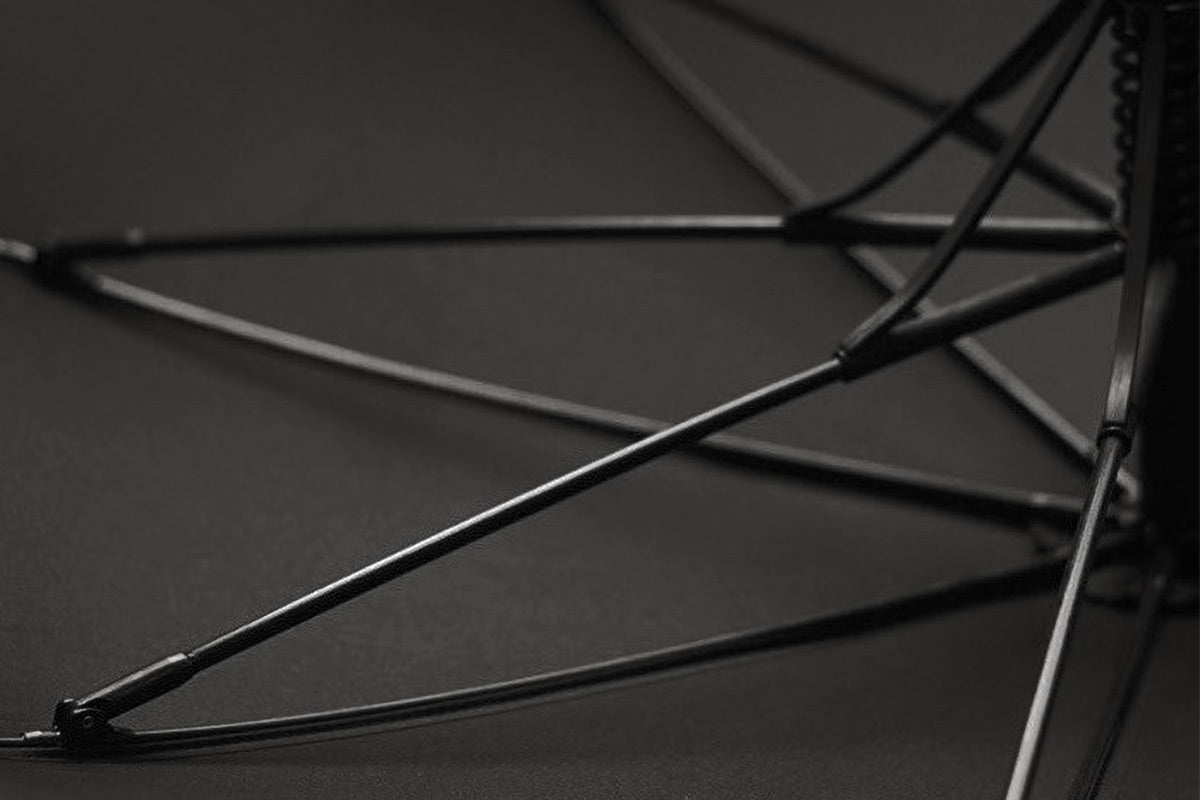
The frame is the skeleton of the umbrella, and it is where almost every cheap umbrella collapses — literally. Two things matter: the material the ribs are made of, and how they are attached to the shaft.
Frame material: fiberglass beats steel
Traditional umbrellas use steel ribs, which are heavy and prone to permanent bending after a single strong gust. Modern luxury umbrellas use fiberglass ribs — lighter, more flexible, and able to bend with the wind and snap back to shape rather than deforming. Fiberglass ribs are the single biggest reason a quality umbrella survives weather that destroys cheaper alternatives.
The shaft (the central pole) is a different question. Here, you actually want a metal core — usually aluminum or steel — for stiffness and balance. The combination of a metal shaft with fiberglass ribs is the gold standard, and it is what you will find across our gentlemen's umbrella collection.
Rib attachment and joint quality
Pick up an umbrella and open it. Look at where the ribs meet the runner (the piece that slides up the shaft when you open it). On a cheap umbrella, the joints are crimped plastic that snaps off after a few months. On a luxury umbrella, the joints are reinforced metal hinges designed to flex thousands of times without fatigue.
This is also where the wind-test happens. A premium windproof umbrella uses a vented or double-canopy design that lets wind pass through rather than catching the dome like a sail. That is what separates an umbrella that survives a storm from one that ends up in a bin two blocks from where you bought it.
2. The Canopy: Fabric, Coating, and Construction
The canopy is what people actually see, and it is also the part most likely to fade, leak, or develop pinholes within a year of careless ownership. Three things matter.
Fabric weight and weave
Cheap umbrellas use thin polyester that lets light through when held up to the sun. A luxury umbrella uses tightly woven 190T or 210T pongee fabric — dense enough to repel rain even in heavy downpours, light enough to dry quickly. Hold a sample up to a window. If you can see clearly through it, the fabric is too thin.
Waterproof coating
Premium umbrellas use a Teflon or PU coating on the underside of the canopy. This is what makes water bead up and roll off rather than soaking in. The test is simple: drop water on the fabric. On a luxury umbrella, the droplets will sit on the surface like pearls. On a cheap one, the fabric darkens immediately.
Stitching and seam construction
Run your fingers along the seams where the panels meet. On a quality umbrella, the stitching is tight, even, and reinforced at the rib tips. On a cheap one, you will feel loose threads, uneven spacing, or thin spots where rain will eventually find its way through.
3. The Handle: Where Craftsmanship Shows
The handle is the part you actually touch, every single time you use the umbrella. It is also where corner-cutting is most visible — and most painful. A true luxury umbrella uses one of three handle types, each with its own character.
Wooden handles
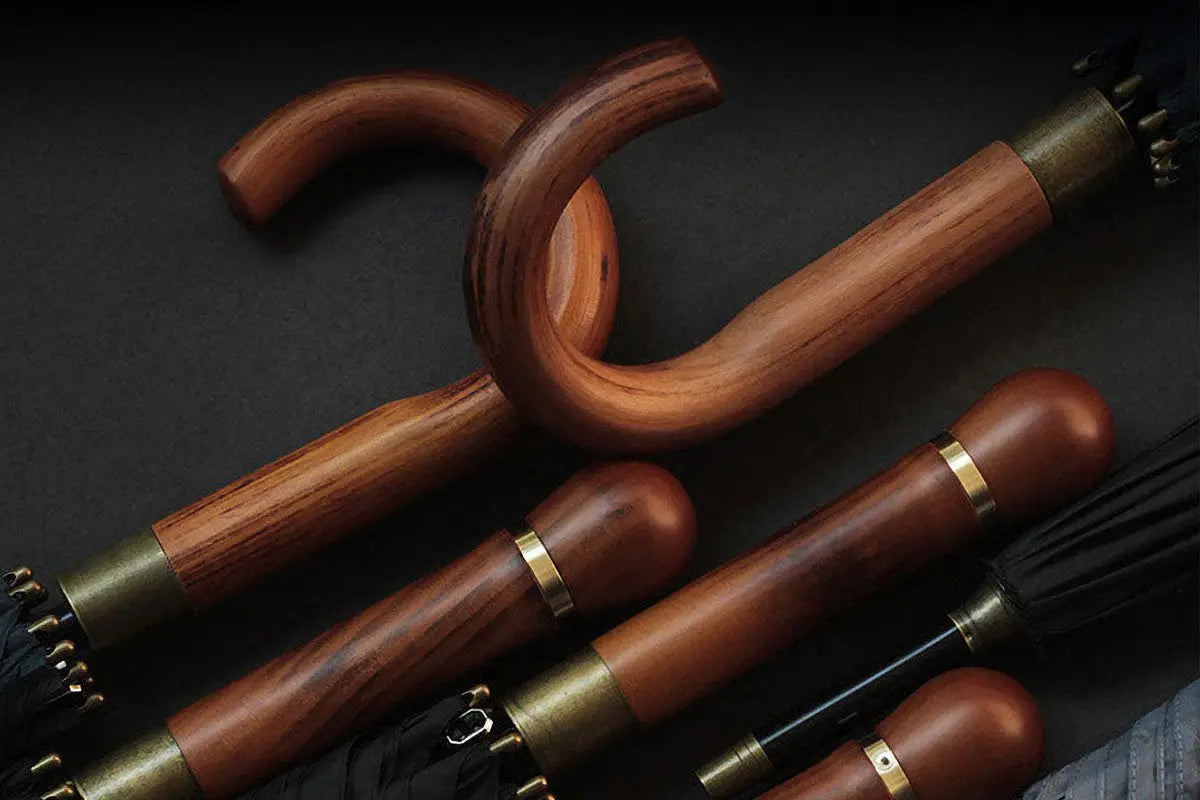
The classic. Solid wood — usually beech, chestnut, or maple — shaped into a J-curve or Derby crook and finished by hand. Real wood develops a patina over years of use; it warms in your palm; it announces itself the moment you pick it up. Avoid imitation wood (you can spot it by the seam where the plastic mold was joined). A real wooden handle has visible grain, a slight unevenness, and feels heavy without being awkward. Our luxury wooden handle umbrella and gentleman's walking umbrella are both built around handles like this.
Crystal and decorative handles
Used on women's luxury umbrellas, often paired with a folding mechanism. The best examples use cut crystal or hand-set stones with substantial weight behind them. If the handle feels hollow or rattles, walk away. The Prestige crystal-handle folding umbrella is a good reference point for what this looks like done properly.
Sculpted metal handles
Animal heads, architectural shapes, polished or antiqued finishes — usually solid brass with weight behind them. Look for clean detail in the casting and a satisfying heft. Hollow metal handles dent over time and feel cheap. The Fox Head umbrella is an example of this style done with actual craftsmanship rather than cosmetic plating.
4. The Mechanism: Manual vs Automatic
This is where personal taste comes in. There is no objectively better choice — only the one that suits how you actually carry an umbrella.
Manual open
Push the canopy up the shaft yourself. Quieter, more controlled, and traditionally associated with formal walking umbrellas. Less to break over time.
Automatic open
Press a button and the canopy springs open in a fraction of a second. Best for the moment you step out of a taxi or doorway and rain is already falling. The catch: cheap auto-open mechanisms wear out within a year. A luxury auto-open mechanism, like the one in our elegant classic umbrella, uses a steel spring and a reinforced runner that will keep snapping open for thousands of cycles.
Auto open and close
The button does both — open and close — at the press. Convenient, but adds an extra failure point. Worth it on a folding umbrella you carry in a bag; less essential on a long umbrella you hang on a coat rack.
Quick Comparison: Luxury vs Mass-Market Umbrellas
| Feature | Mass-Market Umbrella | Luxury Umbrella |
|---|---|---|
| Frame material | Rigid steel, bends permanently | Fiberglass, flexes and recovers |
| Canopy fabric | Thin polyester | 210T pongee with PU coating |
| Handle | Plastic or imitation wood | Solid wood, crystal, or cast metal |
| Stitching | Loose, uneven | Tight, reinforced at rib tips |
| Mechanism | Plastic runner, fails fast | Steel spring, thousands of cycles |
| Lifespan | Under 1 year | 10+ years |
| Cost per year of use | $30 to $50 | $10 to $25 |
Choosing the Right Size
Even the best-built umbrella is the wrong umbrella if it is the wrong size. Here is the simple breakdown:
- Compact folding (under 95 cm canopy): Lives in a handbag or briefcase. Good for unexpected showers; not ideal as a primary umbrella in heavy rain. Browse our folding umbrella collection.
- Standard long (100 to 110 cm canopy): The everyday luxury umbrella. Covers one person and a partner comfortably. Most elegant silhouette. See our long umbrella collection.
- Golf size (120 cm and above): Built for two people and serious weather. Look for double-canopy construction so wind passes through rather than catching the dome. The double-canopy golf umbrella with wooden handle is the example to study.
Marketing Claims to Ignore
A few common selling points sound impressive but tell you nothing about quality:
- "Windproof" with no specifics. Every umbrella claims this. Without details on frame material and canopy construction, the word is meaningless.
- "Designer" with no designer named. If there is no actual designer behind the product, the label is decorative.
- "UV protection" on a rain umbrella. Most coated canopies block UV by default. It is rarely a meaningful differentiator unless the product is specifically designed as a sun umbrella.
- "Premium" used as the only descriptor. Real premium products describe what makes them premium. Vague language is a tell.
How Much Should You Actually Spend?
Price ranges that genuinely correspond to quality, in 2026:
- Under $50: Disposable. Expect to replace it within a year.
- $50 to $100: Decent mid-tier. Usable, but rarely heirloom quality.
- $120 to $250: True luxury territory. Fiberglass frame, real wood or hand-finished handle, premium fabric. This is where craftsmanship begins.
- $300 and above: Either branded fashion premium or genuine artisanal handmade. Pay close attention — the price gap between these two is huge but the visible difference can be small.
For reference, our luxury umbrella collection sits in the $120 to $270 range — the band where you get genuine craftsmanship without paying the markup that comes with a fashion-house logo.
How to Make a Luxury Umbrella Last a Decade
- Never store it closed while wet. Open it indoors and let it dry naturally — closing a wet umbrella warps the ribs and rots the fabric.
- Shake gently, do not snap. The temptation to shake water off violently is what cracks rib tips.
- Wipe the wooden handle occasionally with a barely damp cloth, then dry. Never soak.
- Store hanging from the handle, not standing on the tip. The tip cap is a wear point and pressure damages the canopy fold.
- If a rib bends, send it for repair rather than replacing the whole umbrella. Quality manufacturers rebuild rather than discard.
Frequently Asked Questions
Are luxury umbrellas worth the money?
If you use an umbrella regularly, yes. A $150 umbrella that lasts ten years costs $15 per year. Three $40 umbrellas that each last under a year cost $120 in the same period — for an inferior experience every time it rains.
What is the difference between a windproof and a regular umbrella?
A windproof umbrella uses fiberglass ribs (which flex rather than break) and either a vented or double-canopy construction (which lets wind pass through). A regular umbrella uses rigid steel ribs and a single sealed canopy that catches wind like a sail.
Is a folding or long umbrella better?
Long umbrellas are more durable, more elegant, and more comfortable to use in heavy rain. Folding umbrellas are more practical because you can carry one without committing to it. Most people who own a luxury umbrella eventually own one of each.
How can I tell if a wooden handle is real wood?
Look closely at the surface. Real wood shows grain — slight inconsistencies, natural color variation, sometimes a faint knot. Plastic handles molded to look like wood have a perfect, repeated pattern and a visible mold seam where the two halves of the mold joined.
Do luxury umbrellas come with a warranty?
The best brands stand behind their products. We offer a 30-day return window and warranty coverage on manufacturing defects — see our FAQ page for details, or contact us directly with any question about a specific product.
The Bottom Line
A genuine luxury umbrella is one of those rare possessions where the difference between cheap and excellent is visible at every level — the way it feels in your hand, the way it opens, the way it survives the weather. Once you have carried a real one, going back to a $20 supermarket umbrella feels like wearing a paper suit.
If you are ready to invest, look for the four pillars: a fiberglass frame, a tightly woven coated canopy, a hand-finished handle in real materials, and a mechanism built to last. Get those right, and the umbrella you buy this year is the umbrella you will still be carrying in 2036.
Start with our complete luxury umbrella collection, or browse by category — wooden handle umbrellas, umbrellas for gentlemen, or umbrellas for ladies. You can also read what our customers say on our reviews page.


